Polysaccharides
A long chain of monosaccharides linked by glycosidic bonds is known as a polysaccharide (poly- = “many”). The chain may be branched or unbranched and may contain different types of monosaccharides. The molecular weight of a polysaccharide can be quite high, reaching 100,000 Daltons or more if enough monomers are joined into a polymer. Starch, glycogen, cellulose, and chitin are some major examples of polysaccharides important in living organisms.
Storage Polysaccharides
Starch is the stored form of sugars in plants and is made up of a mixture of two polysaccharides, amylose and amylopectin (both polymers of glucose). Plants are able to synthesize glucose using light energy gathered in photosynthesis, and the excess glucose, beyond the plant’s immediate energy needs, is stored as starch in different plant parts, including roots and seeds. The starch in the seeds provides food for the embryo as it germinates and can also serve as a food source for humans and animals, who will break it down into glucose monomers using digestive enzymes.
Structural Polysaccharides
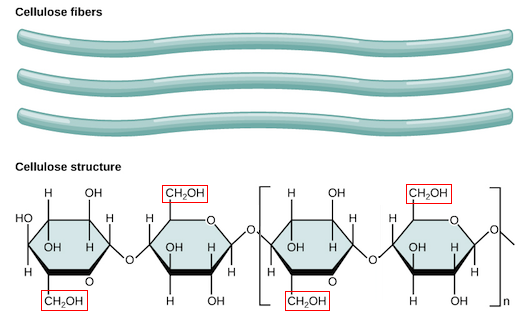
Although energy storage is one important role for polysaccharides, they are also crucial for another purpose: providing structure. Cellulose, for example, is a major component of plant cell walls, which are rigid structures that enclose the cells (and help make lettuce and other veggies crunchy). Wood and paper are mostly made of cellulose, and cellulose itself is made up of unbranched chains of glucose monomers linked by - glycosidic bonds.