Steroids are another class of lipid molecules, identifiable by their structure of four fused rings. Although they do not resemble the other lipids structurally, steroids are included in lipid category because they are also hydrophobic and insoluble in water. All steroids have four linked carbon rings and several of them, like cholesterol, also have a short tail. Many steroids also have an –OH functional group attached at a particular site, as shown for cholesterol below; such steroids are also classified as alcohols, and are thus called sterols.
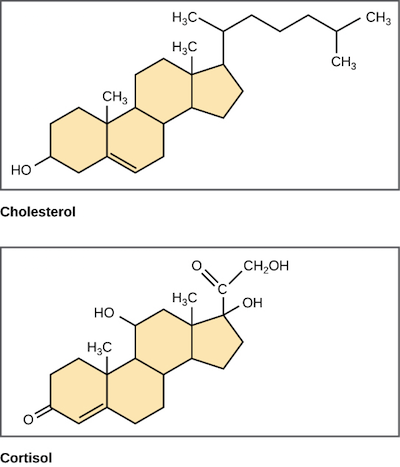
Cholesterol, the most common steroid, is mainly synthesized in the liver and is the precursor to many steroid hormones. These include the sex hormones testosterone and estradiol, which are secreted by the gonads (testes and ovaries). Cholesterol also serves as the starting material for other important molecules in the body, including vitamin D and bile acids, which aid in the digestion and absorption of fats from dietary sources. It’s also a key component of cell membranes, altering their fluidity and dynamics.