A fixed action pattern is a type of innate behavior and is a predictable series of actions triggered by a cue, sometimes called the key stimulus. Though a fixed action pattern is more complex than a reflex, it’s still automatic and involuntary. Once triggered, it will go on to completion, even if the key stimulus is removed in the meantime.
Egg Retrieval
A well-studied example of a fixed action pattern occurs in ground-nesting water birds, like graylag geese. If a female graylag goose’s egg rolls out of her nest, she will instinctively use her bill to push the egg back into the nest in a series of very stereotyped, predictable movements. The sight of an egg outside the nest is the stimulus that triggers the retrieval behavior.
It’s clear why this hardwired trait would be favored by natural selection. Goose mothers that retrieve their lost eggs are likely to have more surviving offspring, on average, than those that don’t.
However, this fixed action pattern can also occur under circumstances where it is not useful.
- If the egg that rolls out of the nest is picked up and taken away, the goose will keep moving her head as though pushing an imaginary egg.
- The goose will try to push any egg-shaped object, such as a golf ball, if it is placed near the nest. She’ll even carry out the retrieval pattern in response to a much larger object, such as a volleyball.
This example illustrates the fixed aspect of a fixed action pattern. In the great majority of cases a goose is likely to encounter in nature, the behavior of rolling any egg-like object near the nest back into the nest will be beneficial. However, it’s simply a biological program that runs in response to a stimulus and can have unhelpful results under unusual circumstances.
Male Sticklebacks
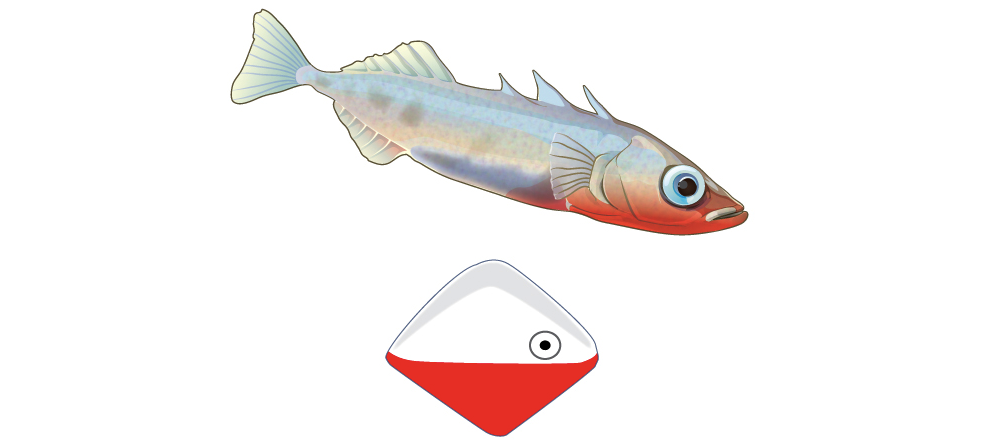
Another example of a fixed action pattern comes from the three-spined stickleback, a small freshwater fish. During the breeding season, male sticklebacks develop a red belly and display innate aggressive behavior towards other males.
When a male stickleback spots another nearby male, he will launch into a fixed action pattern involving aggressive displays designed to scare off the stranger. The specific stimulus that triggers this fixed action pattern is the red belly coloration pattern characteristic of males during breeding season.
Scientists establish this as the trigger through a lab experiment. Researchers exposed male fish to objects that were painted red on their lower halves but didn’t otherwise look like a fish, see below. The male stickleback responded aggressively to the objects just as if they were male sticklebacks. In contrast, no response was triggered by lifelike male stickleback models that were painted white.