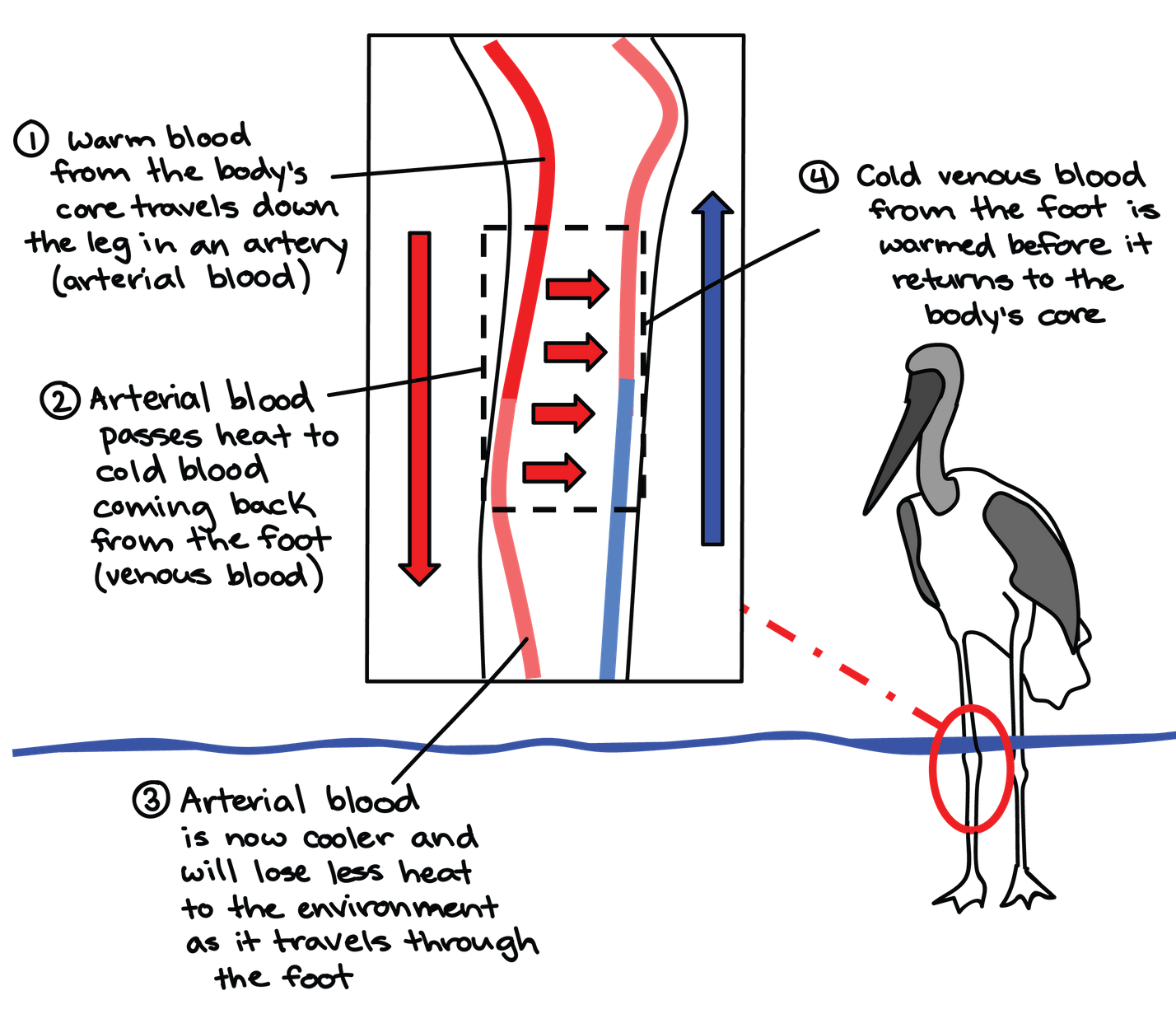
A countercurrent heat exchange describes allowing heat to be transferred from blood vessels containing warmer blood to those containing cooler blood. For example, in the leg of a wading bird, the artery that runs down the leg carries warm blood from the body. The artery is positioned right alongside a vein that carries cold blood up from the foot. The descending, warm blood passes much of its heat to the ascending, cold blood by conduction. This means that less heat will be lost in the foot due to the reduced temperature difference between the cooled blood and the surroundings and that the blood moving back into the body’s core will be relatively warm, keeping the core from getting cold.