Key Points
- DNA cloning is a molecular biology technique that makes identical copies of a piece of DNA, such as a gene.
- In a typical cloning experiment, a target gene is inserted into a circular piece of DNA called a plasmid.
- The plasmid is introduced into bacteria via a process called transformation, and bacteria is carrying the plasmid are selected using antibiotics
- Bacteria with the correct plasmid are used to make more plasmid DNA, or in some cases, induced to express the gene and make protein
Overview of DNA Cloning DNA cloning is the process of making multiple, identical copies of a particular piece of DNA. In a typical DNA cloning procedure, the gene or other DNA fragment of interest (perhaps a gene for a medically important human protein) is first inserted into a circular piece of DNA called a plasmid. The insertion is done using enzymes that “cut and paste” DNA, and it produces a molecule of recombinant DNA, or DNA assembled out of fragments from multiple sources.
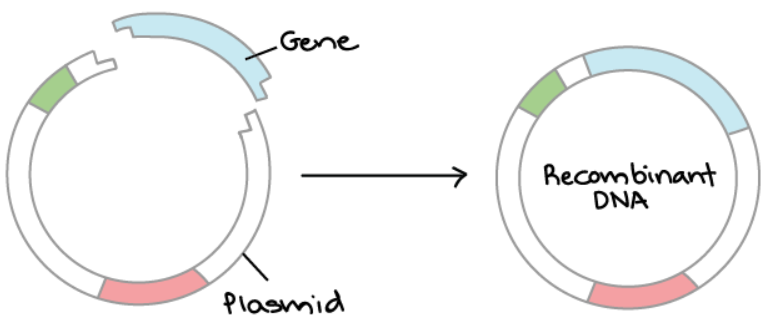
Next, the recombinant plasmid is introduced into bacteria. Bacteria carrying the plasmid are selected and grown up. As they reproduce, they replicate the plasmid and pass it on to their offspring, making copies of the DNA it contains.
What is the point of making many copies of a DNA sequence in a plasmid? In some cases, we need lots of DNA copies to conduct experiments or build new plasmids. In other cases, the piece of DNA encodes a useful protein, and the bacteria are used as “factories” to make the protein. For instance, the human insulin gene is expressed in E. coli bacteria to make insulin by diabetics.
Steps of DNA Cloning One example of DNA cloning is used to synthesize a protein in bacteria. The basic steps are:
- Cut open the plasmid and “paste” in the gene. This process relies on restriction enzymes (which cut DNA) and DNA ligase (which joins DNA).
- Insert the plasmid into bacteria. Use antibiotic selection to identify the bacteria that took up the plasmid.
- Grow up lots of plasmid-carrying bacteria and use them as “factories” to make the protein. Harvest the protein from the bacteria and purify it.
1. Cutting and Pasting DNA To join together pieces of DNA from different sources, scientists commonly use two types of enzymes: restriction enzymes and DNA ligase.
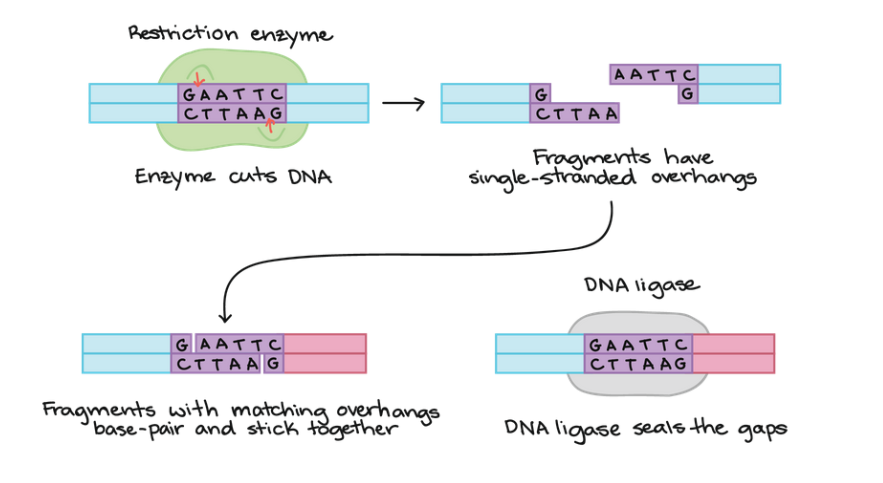
A restriction enzyme is a DNA-cutting enzyme thar recognizes a specific target sequence and cuts DNA into two pieces at or near that site. Many restriction enzymes produce cut ends with short, sing-stranded overhangs. If two molecules have matching overhangs, they can base-pair and stick together. However, they won’t combine to form an unbroken DNA molecule until they are joined by DNA ligase, which seals gaps in the DNA backbone.
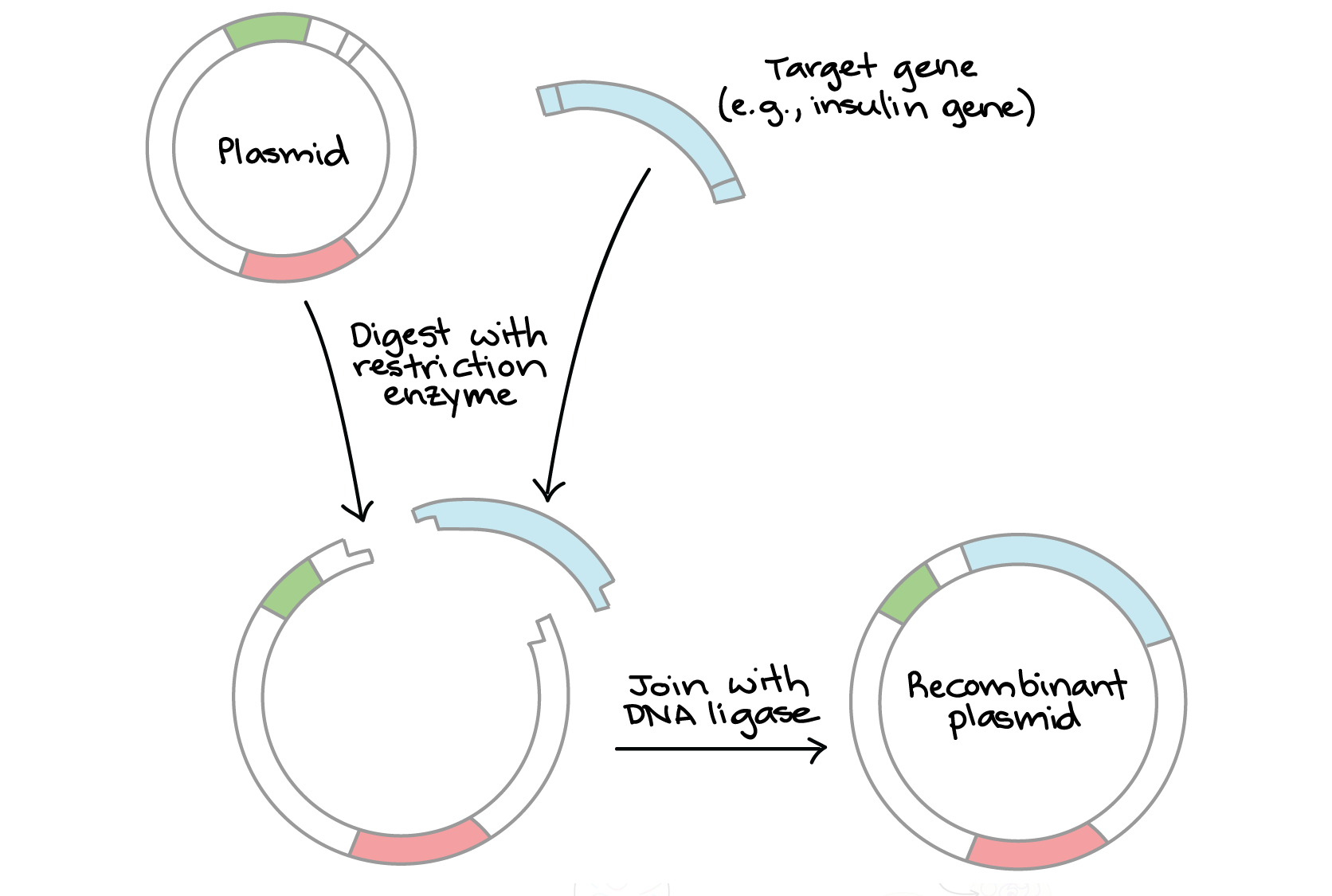
In cloning, the goal is to insert a target gene (e.g., for human insulin) into a plasmid. Using a carefully chosen restrictive enzyme, we digest:
- The plasmid, which has a single cut site
- The target gene fragment, which has a cut site near each end.
Then, we combine the fragments with DNA ligase, which links them to make a recombinant plasmid containing the gene.
2. Bacterial Transformation and Selection Plasmids and other DNA can be introduced into bacteria, such as the harmless E. coli used in labs, in a process called transformation. During transformation, specifically prepared bacterial cells are given a shock (such as high temperature) that encourages them to take up foreign DNA.
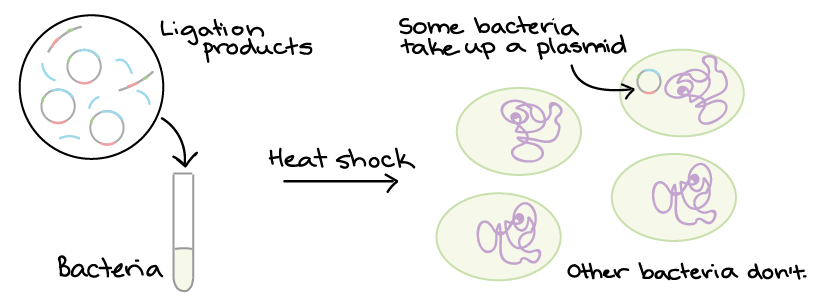
Not all colonies will necessarily contain the right plasmid. That’s because during ligation, DNA fragments don’t always get “pasted” in exactly the way we intend. Instead, we must contain DNA from several colonies and see whether each one contain the right plasmid. Methods like restriction enzyme digestion and PCR are commonly used to check the plasmids.
3. Protein Production Once we have found a bacterial with the right plasmid, we can grow a large culture of plasmid-bearing bacteria. Then, we give the bacteria a chemical signal that instructs them to make a target protein.
The bacteria serves as miniature “factories,” churning out large amounts of proteins. For instance, if our plasmid contained the human insulin gene, the bacteria would start transcribing the gene and translating the mRNA to produce man molecules of human insulin protein.
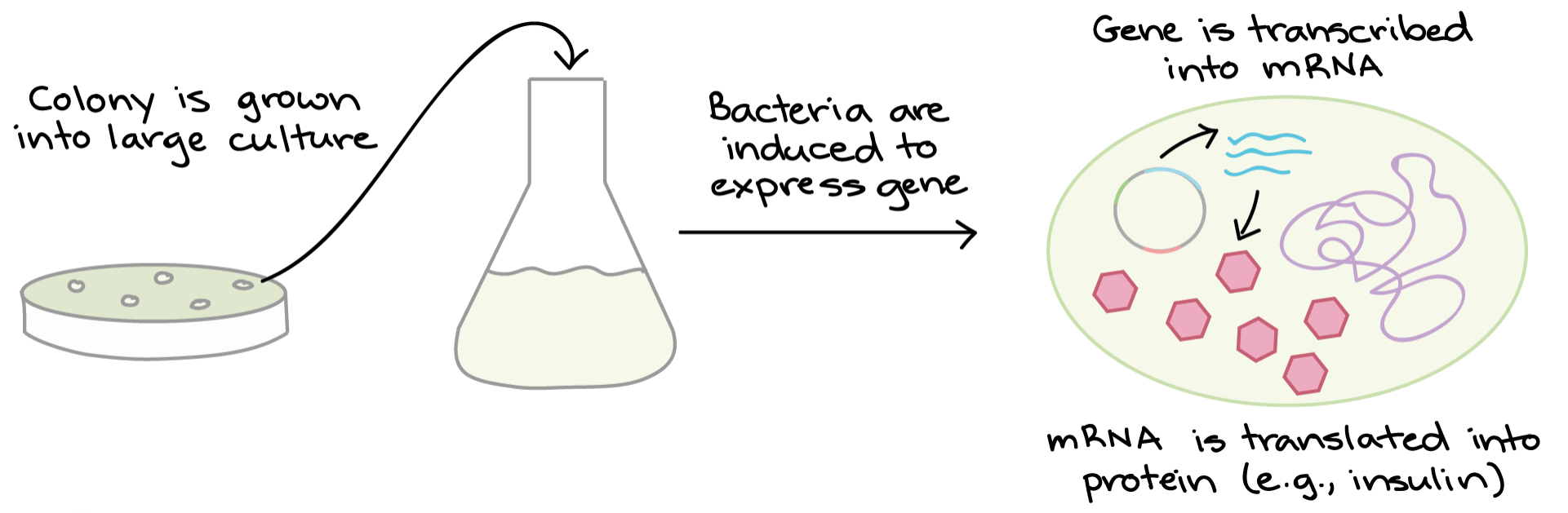
Once the protein has been produced, the bacterial cells can be split open to release it. There are many other proteins and macromolecules floating around in bacteria besides the target protein (e.g., insulin). Because of this, the garget protein must be purified, or separated from the other contents of the cells by biochemical techniques. The purified protein can be used for experiment or, in the case of insulin, administered to patients.
Uses of DNA Cloning DNA molecules built through cloning techniques are used for many purposes in molecular biology. A short list of examples includes:
- Biopharmaceuticals. DNA cloning can be used to make human proteins with biomedical applications, such as the insulin mentioned above. Other examples of recombinant proteins include human growth hormone, which is given to patients who are unable to synthesize the hormone, and tissue plasminogen activator (tPA), which is used to treat strokes and prevent blood clots. Recombinant proteins like these are often made in bacteria.
- Gene therapy. In some genetic disorders, patients lack the functional form of a particular gene. Gene therapy attempts to provide a normal copy of the gene to the cells of a patient’s body. For example, DNA cloning was used to build plasmids containing a normal version of the gene that’s nonfunctional in cystic fibrosis. When the plasmids were delivered to the lungs of cystic fibrosis patients, lung function deteriorated less quickly
- Gene analysis. In basic research labs, biologists often use DNA cloning to build artificial, recombinant versions of genes that help them understand how normal genes in an organism function.
These are just a few examples of how DNA cloning is used in biology today. DNA cloning is a very common technique that is used in a huge variety of molecular biology applications.