The rough endoplasmic reticulum (rough ER) is a type of endoplasmic reticulum and gets its name from the bumpy ribosomes attached to its cytoplasmic surface. As these ribosomes make proteins, they feed the newly forming protein chains into the lumen. Some are transferred fully into the ER and float inside, while others are anchored in the membrane.
Inside the ER, the proteins fold and undergo modifications, such as the addition of carbohydrate side chains. These modified proteins will be incorporated into cellular membranes—the membrane of the ER or those of other organelles—or secreted from the cell.
If the modified proteins are not destined to stay in the ER, they will be packaged into vesicles, or small spheres of membrane that are used for transport, and shipped to the Golgi apparatus. The rough ER also makes phospholipids for other cellular membranes, which are transported when the vesicle forms.
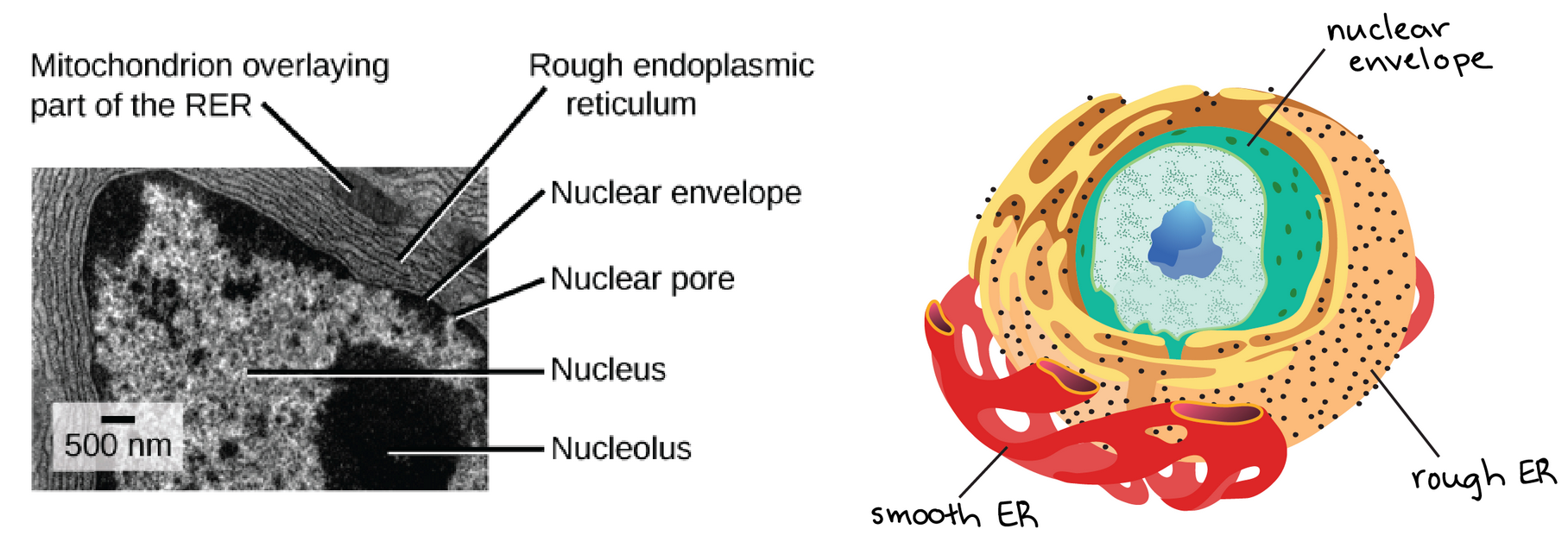
Since the rough ER helps modify proteins that will be secreted from the cell, cells whose job is to secrete large amounts of enzymes or other proteins, such as liver cells, have lots of rough ER.