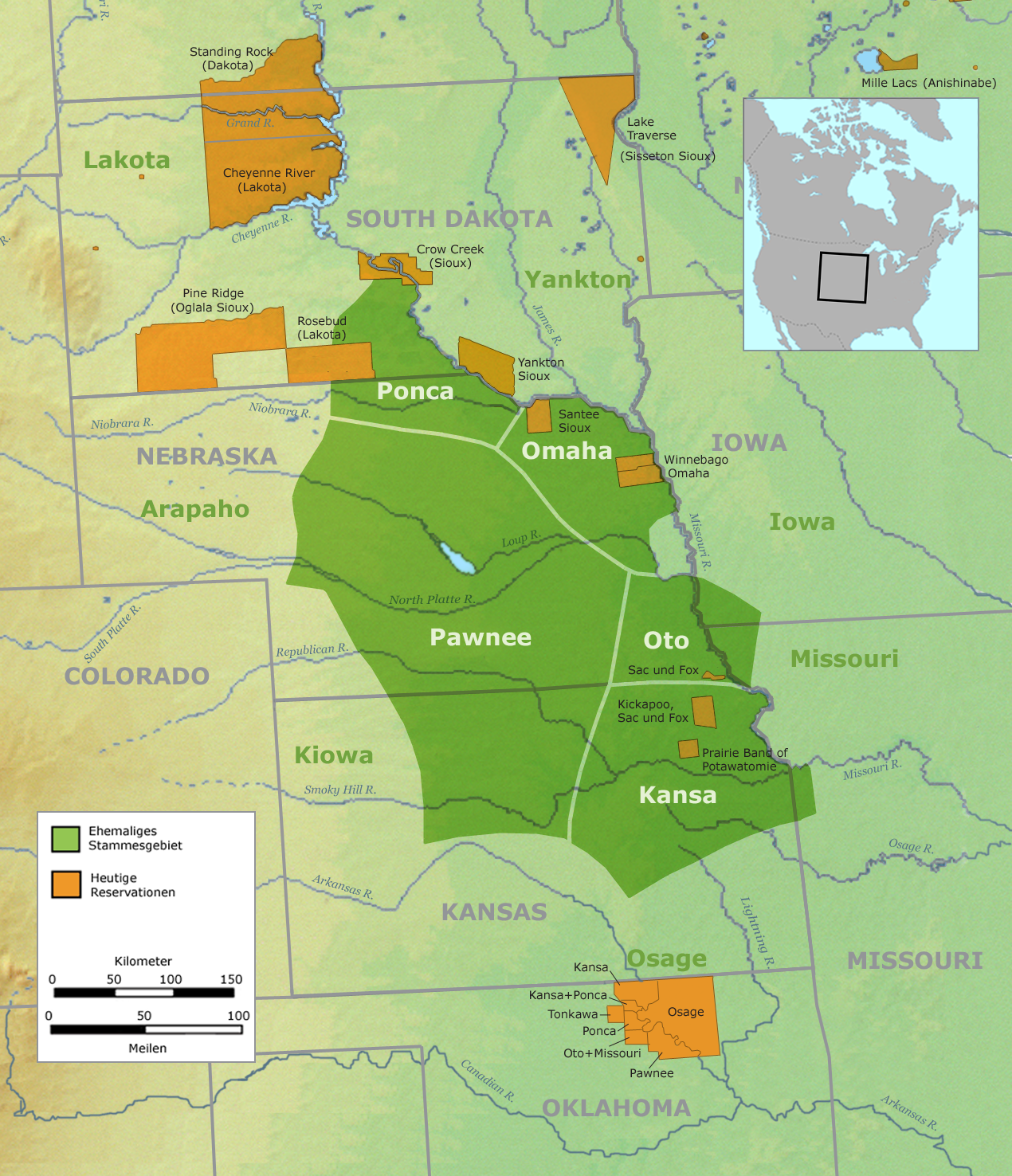
The Plains region spreads to the east of the Rocky Mountains, up to 400 miles across the flat land of the center of the present-day United States. The Plains were very sparsely populated until about 1100 CE, when Native American groups including Pawnees, Mandans, Omahas, Wichitas, Cheyennes, and other groups started to inhabit the area.
The climate supported limited farming closer to the major waterways but ultimately became most fruitful for hunting large and small game.
Farming Practices
Plains Native Americans planted the three sisters—beans, squash, and corn—as they arrived from the Southwest around 900 CE. Agriculture was most commonly practiced and most fruitful along rivers. Plains inhabitants also harvested plants for medicinal purposes; for example, chokecherries were thought to cure stomach sickness. Women farmed and gathered, while men hunted. Hunting became a more dominant practice when a drought struck in the 1300s.
Indigenous people hunted large animals early as 12,000 BCE. They practiced a mixture of agriculture and hunting on foot, using large spears with Clovis points at the end. Clovis points, sharp points carved out of stone, have been now discovered all across North America. Archaeologists estimate that a spear with a Clovis point at the end could kill animals the size of African elephants, corroborating the idea that Native Americans used these two-centimeter spearpoints to hunt massive animals like mammoths, buffalo, and bison.
Social Organizations
In earlier, more agrarian societies, Native Americans on the Plains would set up sedentary bases in earth lodge. Highly agrarian groups, like the Wichitas, built grass homes near their crops. In the eastern part of the Plains, where the Hidatsa and Mandan peoples cultivated maize, they established trade networks along the Mississippi River. They made bull boats by stretching bison skin over a wooden frame to trade goods along the rivers. They traded elaborate baskets and leather for metal and furs from the Northeast.
As Native Americans on the Plains became more focused on hunting, they became more nomadic. They constructed teepees—conical tents made out of buffalo skin and wood—shelters that were easy to put up and take down if a band was following a buffalo herd for hunting. Sometimes, Native Americans on the Plains lived in a combination of nomadic and sedentary settings: they would plant crops and establish villages in the spring, hunt in the summer, harvest their crops in the fall, and hunt in the winter.
These hunting-agrarian groups were mostly divided at the level of a band. A band could consist of a dozen to a few hundred people who lived, hunted, and traveled together. Often, bands would unite in a village setting to farm or hunt a large herd of bison. Villages usually had fluid populations and little to no political structure.