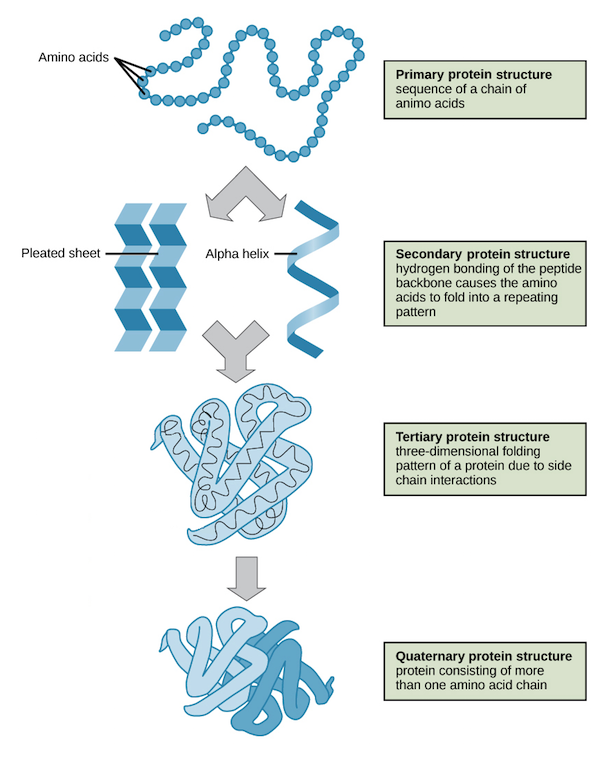
Protein quaternary structure is the fourth (and highest) classification level of protein structure. Protein quaternary structure refers to the structure of proteins which are themselves composed of two or more smaller protein chains (also referred to as subunits). When these subunits come together, they give the protein its quaternary structure.
We’ve already encountered one example of a protein with quaternary structure: hemoglobin. As mentioned earlier, hemoglobin carries oxygen in the blood and is made up of four subunits, two each of the α and β types. Another example is DNA polymerase, an enzyme that synthesizes new strands of DNA and is composed of ten subunits.
In general, the same types of interactions that contribute to tertiary structure (mostly weak interactions, such as hydrogen bonding and London dispersion forces) also hold the subunits together to give quaternary structure.