Plasmids and other DNA can be introduced into bacteria, such as the harmless E. coli used in labs, in a process called transformation. During transformation, specifically prepared bacterial cells are given a shock (such as high temperature) that encourages them to take up foreign DNA.
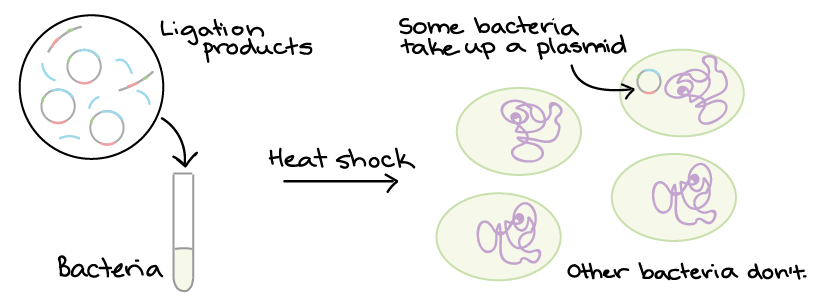
Not all colonies will necessarily contain the right plasmid. That’s because during ligation, DNA fragments don’t always get “pasted” in exactly the way we intend. Instead, we must contain DNA from several colonies and see whether each one contain the right plasmid. Methods like restriction enzyme digestion and PCR are commonly used to check the plasmids.
The process is followed by protein production.