This region stretches down the Mississippi River and into the area surrounding the Gulf of Mexico, through some of the most fertile lands in North America. Native Americans were the first to take advantage of such promising agricultural conditions.
The prominent Native American groups in this area were known as the Five Civilized Tribes: Cherokees, Choctaws, Chickasaws, Creeks, and Seminoles. Mississippian culture, dominant from 1000 CE onward, developed from the beginnings of farming in Hopewellian culture, which dominated a few centuries before in the Northeast.
Corn Farming
The Mississippian peoples were excellent farmers. Notably, Cherokee women planted and harvested crops, including beans, squash, corn, tobacco, and sunflowers. They supplemented their diets with acorns, nuts, seeds, and fruits. Since they did not use any fertilizer, they had to burn the fields and create new ones every season. This required immense amounts of time and labor but ultimately led to large crop yields.
While they had great farming success, Southeastern Native Americans also continued to hunt and fish. They hunted deer with bows and arrows and fished in rivers and in the Gulf of Mexico for protein. In southern Florida, Calusa people developed complex fishing and trapping systems for clams, mussels, and saltwater fish.
Social Structure
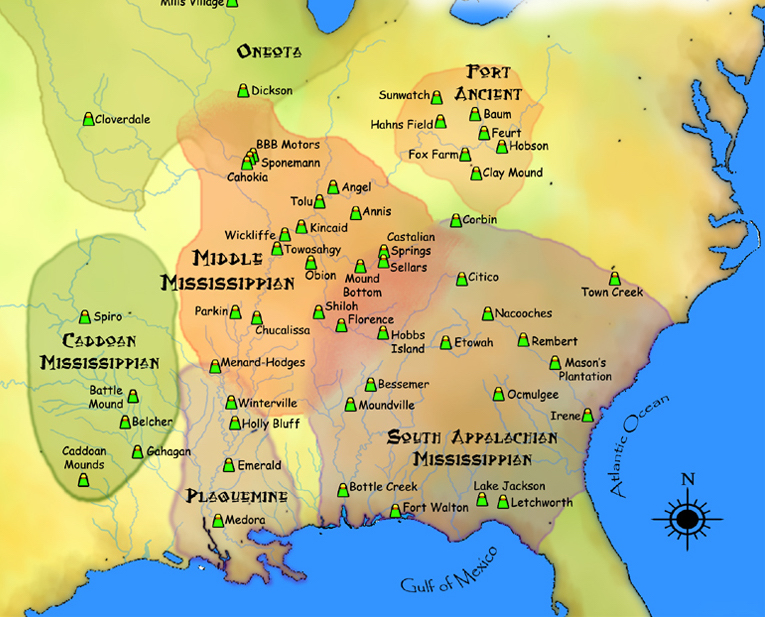
Mississippians continued the mound-building traditions of the Hopewellian people and extended them to the south and west. Mississippian mound societies were larger and more complex than previous communities, indicating unprecedented population growth and wealth.
Cahokia, near modern-day St. Louis, was home to an estimated 40,000 Cahokian people, after whom the city was named. It became the major urban trade center along the Mississippi River and remained the largest city ever recorded in North America until Philadelphia surpassed its population numbers 500 years later.
The agricultural boom of the Mississippian culture concentrated wealth at the top. The Creek people in Georgia practiced slavery, forcing prisoners of war to work their fields. The Southeast Native Americans were the first to organize villages around chiefdoms, in which families were ranked by social status and proximity to the chief himself.