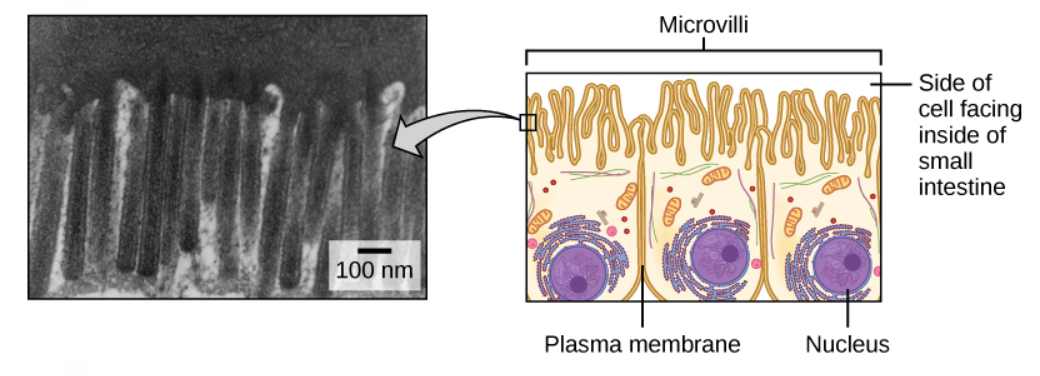
The cell membrane, also known as the plasma membrane or cytoplasmic membrane, is a biological membrane that separates and protects the interior of a cell from the outside environment (the extracellular space). Both prokaryotic and eukaryotic cells have a plasma membrane, a double layer of lipids that separates the cell interior from the outside environment. This double layer consists largely of specialized lipids called phospholipids.
As shown below, proteins are also an important component of the plasma membrane. Some of them pass all the way through the membrane, serving as channels or signal receptors, while others are just attached at the edge. Different types of lipids, such as cholesterol, may also be found in the cell membrane and affect its fluidity.
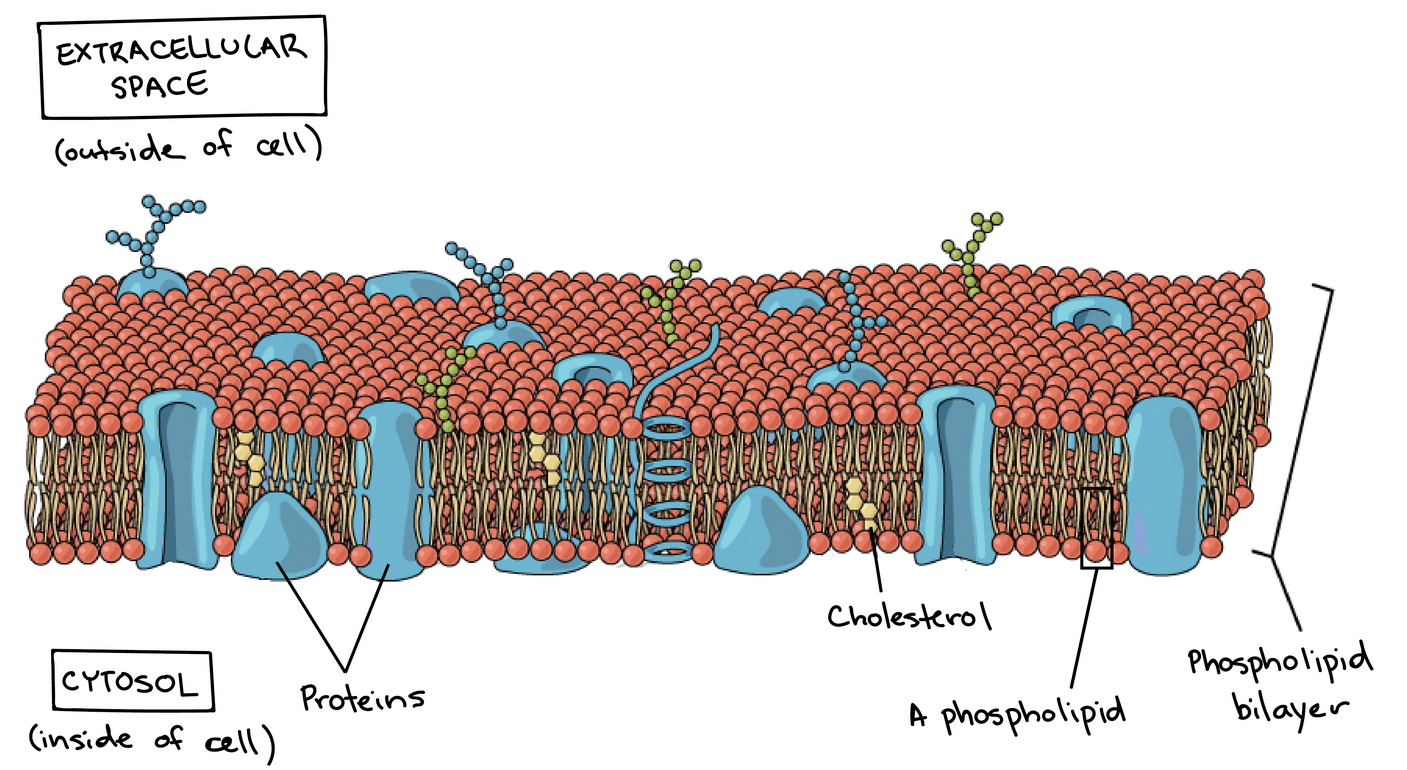
The plasma membrane is the border between the interior and exterior of a cell. As such, it controls passage of various molecules—including sugars, amino acids, ions, and water—into and out of the cell. How easily these molecules can cross the membrane depends on their size and polarity. Some small, nonpolar molecules, such as oxygen, can pass directly through the phospholipid portion of the membrane. Larger and more polar, hydrophilic, molecules, such as amino acids, must instead cross the membrane by way of protein channels, a process that is often regulated by the cell.
The surface area of the plasma membrane limits the exchange of materials between a cell and its environment. Some cells are specialized in the exchange of wastes or nutrients and have modifications to increase the area of the plasma membrane. For instance, the membranes of some nutrient-absorbing cells are folded into fingerlike projections called microvilli. Cells with microvilli cover the inside surface of the small intestine, the organ that absorbs nutrients from digested food. The microvilli help intestinal cells maximize their absorption of nutrients from food by increasing plasma membrane surface area.