Positive feedback is a process that occurs in a feedback loop which exacerbates the effects of a small disturbance. That is, the effects of a perturbation on a system include an increase in the magnitude of the perturbation. That is, A produces more of B which in turn produces more of A. In contrast, a system in which the results of a change act to reduce or counteract it has negative feedback.
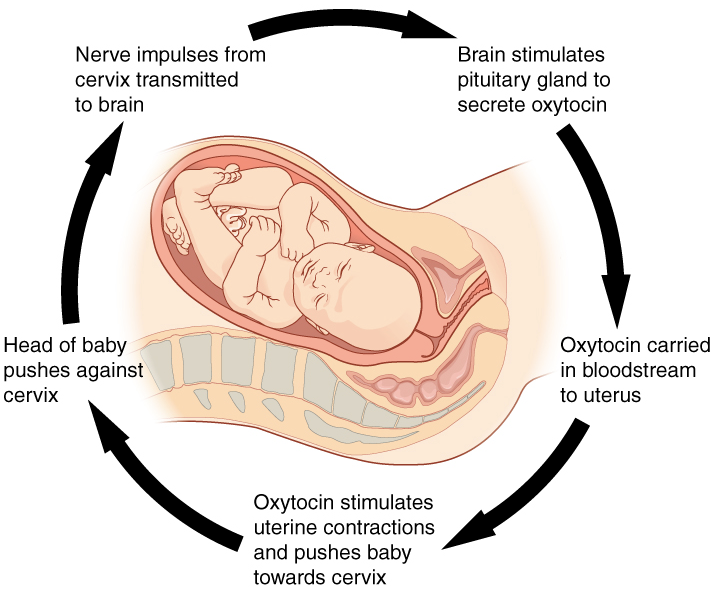
A positive feedback loop comes into play during childbirth. In childbirth, the baby’s head presses on the cervix—the bottom of the uterus, through which the baby must emerge—and activates neurons to the brain. The neurons send a signal that leads to release of the hormone oxytocin from the pituitary gland.
Oxytocin increases uterine contractions, and thus pressure on the cervix. This causes the release of even more oxytocin and produces even stronger contractions. This positive feedback loop continues until the baby is born.